

Intergenerational Housing in Prague: A New Solution for Students
Intergenerational Housing in Prague: A New Solution for Students
An Alternative to the Traditional Rental Market
Intergenerational housing in Prague is emerging as an alternative for students looking for more affordable accommodation in the Czech capital. In response to growing pressure on the local housing market, several Prague districts are experimenting with a model that offers students lower-cost apartments within facilities for elderly residents, in exchange for time dedicated to companionship and shared activities. The initiative aims to address two needs at once: making housing more accessible for young people while helping reduce social isolation among older residents.
How the Intergenerational Housing Model Works
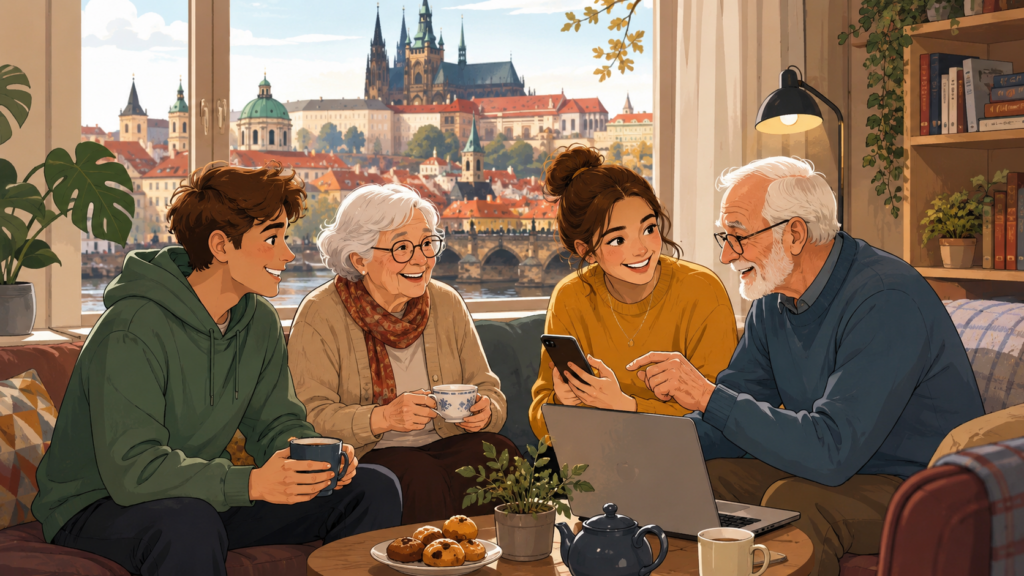
Students participating in these programs do not provide medical or professional care. Their contribution mainly consists of spending time with elderly residents, accompanying them on walks, taking part in shared activities, or helping them use phones and computers. In Prague 3, one of the first districts to adopt the project, students were required to dedicate at least 30 hours per month to residents. In 2023, a studio apartment of around 35 square meters was rented for approximately CZK 4,000 per month, plus CZK 2,000 in additional costs.
Programs Are Expanding Across Several Prague Districts
Intergenerational housing initiatives are currently present in Prague 1, 3, 4, 5, 6 and 7, although the conditions and required number of hours vary from one district to another. In Prague 4, the project launched in Braník in October 2025 will continue during the 2026–2027 academic year.
The initiative, developed together with the district, the Prague 4 Institute of Social Services and the organization Letokruh, has shown how shared living can encourage new relationships and create stronger connections between generations.
A Different Response to Prague’s Housing Pressure
The intergenerational housing model does not replace Prague’s traditional rental market, but it offers an alternative for some students looking for more affordable accommodation. At the same time, it creates opportunities for social interaction and practical support for elderly residents.
In a city where housing affordability remains an important issue, these initiatives show how new forms of shared living can become part of the possible solutions to housing challenges in the Czech capital.