


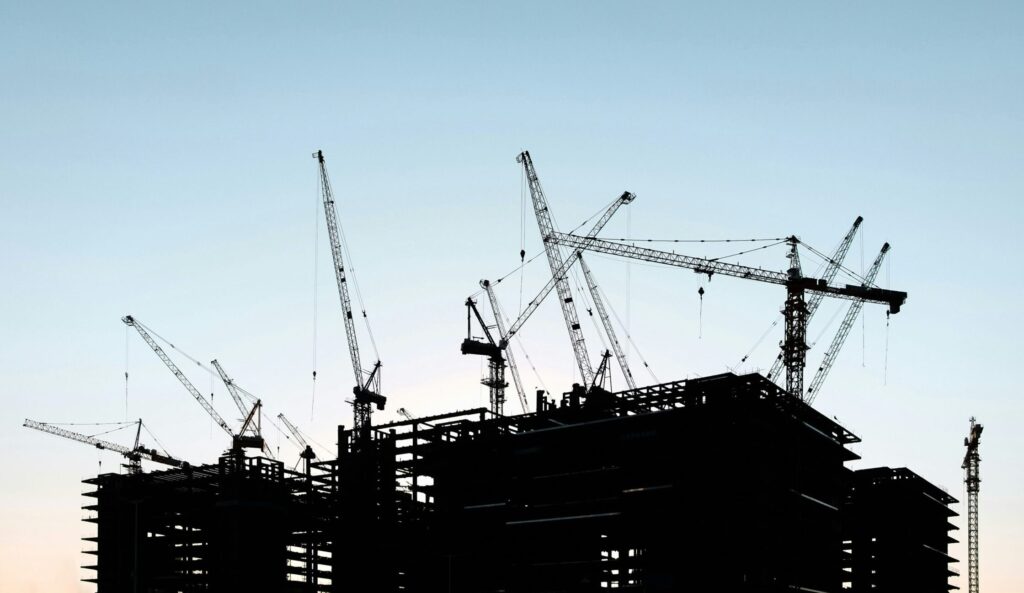
Czech Republic Housing Plan: 50,000 new homes a year at risk without foreign workers
Ambitious housing plan: 50,000 new apartments per year
The government of the Czech Republic aims to significantly accelerate residential construction, targeting 50,000 new apartments per year within five years. This ambitious goal, supported by the economic strategy of ANO and SPD along with the current administration, would mean building around 20,000 more units annually than at present.
However, the plan to boost residential construction in the Czech Republic faces a major structural obstacle: a severe labor shortage in the construction sector. According to a survey conducted by the press agency ČTK among recruitment firms, the industry currently lacks sufficient human resources to sustain such rapid expansion. The tangible risk is that projects could be delayed or even suspended, slowing down the entire housing development program.
Labor shortage: Czech construction at the capacity limit
The Czech construction industry is already operating close to its maximum production capacity. As highlighted by representatives of ManpowerGroup, any sudden increase in demand for new housing immediately translates into difficulties in finding qualified personnel.
The issue is not primarily related to financing or project design, but rather to the availability of skilled workers. Recruitment agencies report a shortage of bricklayers, carpenters, electricians, plumbers, and technical specialists needed to support an additional 20,000 apartments per year. Many companies are no longer turning down contracts due to material shortages, but because they lack sufficient teams to launch new construction sites.
Staffing shortages are already causing significant delays. For technical and engineering positions in particular, recruitment processes can take up to five months, further slowing down the residential construction pipeline.
Foreign workers: a necessary solution
According to leading recruitment agencies, the only viable solution to the workforce crisis is the arrival of foreign workers. The Czech construction industry is already heavily dependent on foreign labor, which makes up a substantial portion of artisans and construction workers on job sites.
Migration policies and entry quotas have therefore become a critical issue. A recent increase in quotas for workers from the Philippines has been described as a step in the right direction, but still insufficient to meet the sector’s needs. Experts suggest expanding similar programs to countries such as Kazakhstan and Serbia, where strong technical and vocational training systems are in place.
Beyond raising quotas, companies are calling for faster and simpler procedures for issuing work and residence permits. Without structural changes in immigration policy, the government’s housing construction plan risks remaining largely theoretical.
A generational shift without replacement
At the core of the workforce crisis lies a clear generational gap. Many experienced craftsmen are gradually retiring, while younger generations are not entering the construction sector in sufficient numbers.
The most in-demand professions – such as bricklayers, carpenters, roofers, and plumbers – require solid technical training, physical endurance, and the ability to work outdoors in all weather conditions. These factors make such careers less attractive to younger workers, who increasingly prefer less physically demanding or more digitally oriented jobs.
The shortage extends beyond manual labor. There is also strong demand for highly qualified professionals, including structural engineers, surveyors, project managers, and site supervisors. This combined lack of operational and technical expertise represents a serious constraint on the expansion of residential construction.
Construction and immigration policy: a strategic challenge
The plan to build 50,000 new apartments per year in the Czech Republic reflects growing housing demand and the need for urban development. However, without effective reforms to migration policies and a substantial expansion of foreign worker quotas, the target appears difficult to achieve.
The labor shortage in construction is no longer just a sectoral issue but a strategic challenge for the entire Czech economy. If the government is serious about increasing housing supply, it will need to act swiftly on immigration policy, vocational training, and the overall attractiveness of construction careers. Otherwise, the promise of a housing boom could turn into a new phase of stagnation for the country’s real estate market.