

EU Right to Repair 2026: What’s New for Landlords and Tenants
New European Rules for Repairing Household Appliances
From 31 July 2026, EU Member States must apply the new rules on the so-called Right to Repair. The aim is to make it easier and more affordable to repair certain products instead of replacing them immediately.
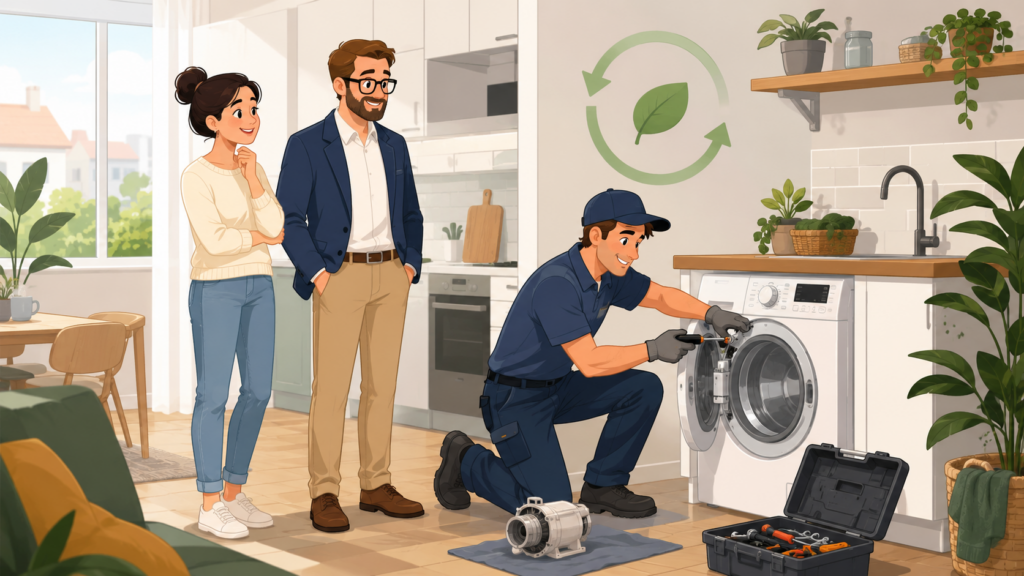
These changes also affect the real estate sector. Furnished apartments often include refrigerators, washing machines, dishwashers and other household appliances that can represent a significant cost for landlords and property managers when they break down.
For products covered by the EU repairability requirements, manufacturers will be required to offer a repair service within a reasonable period and at a reasonable price, even after the legal guarantee has expired. They must also provide accessible information about their repair services and make spare parts available at prices that are not excessive.
Why This Matters for Rental Properties
When an appliance included in a furnished apartment stops working, the landlord usually has to decide whether to repair it or purchase a new one. Until now, replacement could often appear to be the more convenient option, especially when spare parts were difficult to find or repair services were too expensive.
The new rules could help change this balance. Greater availability of spare parts and repair services may extend the lifespan of household appliances, reduce property management costs and limit the waste generated by premature replacements.
For property managers, easier access to information about the availability and estimated cost of repairs may also help them compare different options and respond more quickly when a problem occurs in a rental property.
Greater Protection During the Guarantee Period
The new rules also apply to products that are still covered by the legal guarantee. When a consumer chooses repair instead of replacement, the seller’s liability period is extended by at least one additional year. This measure is intended to make repair a more attractive and reliable option.
However, it is important to distinguish these new European protections from the responsibilities established under a rental agreement. The Right to Repair mainly regulates the relationship between consumers, sellers and manufacturers. It does not automatically determine whether the cost of a specific repair in a rented apartment must be paid by the landlord or the tenant.
To avoid misunderstandings, the rental agreement and handover report should clearly state which appliances belong to the landlord, the condition in which they are provided and how any faults or malfunctions must be reported.
Attention to Purchases Made by Companies
The new rules protect purchases made by individuals for non-professional purposes. They do not automatically apply to business-to-business transactions. Therefore, when a real estate company purchases an appliance as part of its business activities, it may not benefit from the same guarantees granted to private consumers.
Before purchasing appliances for a rental property, it will therefore become increasingly important to consider not only the price and energy consumption, but also the availability of spare parts, access to local repair services and the overall ease of repair.
An EU online platform is also expected to be launched in January 2028 to help consumers find repairers, sellers of refurbished products and repair-related initiatives.
For landlords and tenants, the Right to Repair therefore represents a step towards more efficient and sustainable property management. A well-managed apartment is not only one equipped with modern appliances, but also one in which maintenance, repairs and responsibilities are clearly organised.