


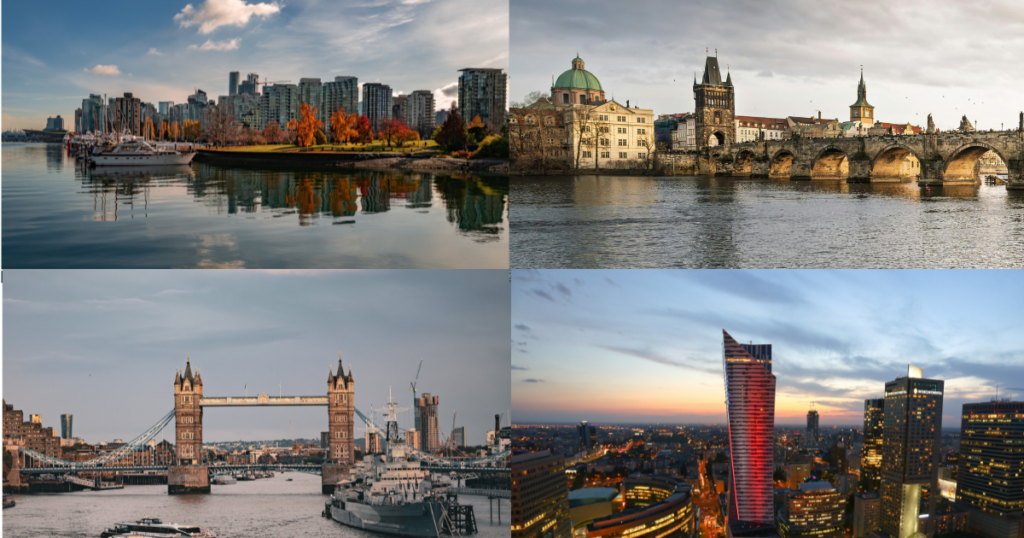
Most Affordable Cities to Live in Europe? Prague Is Out: 3 Cities Where Housing Prices Are Falling
For years, Prague was considered one of the most affordable cities to live in Europe, attracting expats, students, and remote workers. But that’s no longer the case.
After a sharp rise in property prices over the past year, the cost of living in Prague has increased significantly. Today, the Czech capital is no longer among the cheapest cities to live in, especially when it comes to rent and real estate.
A prolonged slowdown in construction has pushed housing supply down, driving both property prices and rental costs up. And Prague is not alone. Across Europe, indeed, many cities once seen as budget-friendly are becoming increasingly expensive.
At the same time, a surprising shift is happening elsewhere. Some traditionally expensive global cities are now seeing property prices fall, opening new opportunities for investors and expats searching for the best affordable cities in Europe for expats and beyond.
Living in Warsaw: a temporary window of affordability
Poland has experienced a major construction boom in recent years, leading to a temporary oversupply in the housing market.
As a result, living in Warsaw is becoming more attractive. Property prices, especially on the secondary market, have dropped by around 2%, making it one of the cheapest cities to live in Europe right now.
Lower interest rates (recently falling below 5%) have also contributed to this shift. However, experts warn that this trend may not last long. Prices are expected to rise again, meaning that living in Varsavia could soon become less affordable.
Living in London: falling prices, but still expensive
It may sound surprising, but living in London is becoming slightly less pressured from a real estate perspective.
According to recent data, London recorded one of the fastest housing price drops since the 2008 financial crisis. This decline is largely due to new property taxes on high-value homes and the end of the “Non-Dom” tax regime, which previously attracted foreign investors.
Still, this doesn’t mean London is becoming cheap. The cost of living remains extremely high, and even with falling property prices, living in London is far from affordable for most people.
Living in Vancouver: lower prices, same affordability challenge
A similar trend can be seen outside Europe. Living in Vancouver, for example, has become slightly less expensive in terms of housing prices. According to the MLS Home Price Index, indeed, property values in Vancouver fell by 4.5% last December, contributing to a slowdown in the Canadian real estate market.
However, affordability remains a major issue. High property values, economic tensions with the U.S., and policies like the empty homes tax continue to limit access to the market.
Even with declining prices, living in Vancouver still comes with a high cost of living, making it inaccessible for many buyers and renters.