

Investing in Prague in 2026: A Guide to the New CNB Rules and the Real Estate Market
Prague’s real estate market is undergoing an unprecedented transformation. Just a few years ago, investing in Prague and buying a property in the city was not that complicated. In 2026, however, we are entering a new era defined by stricter financial controls and greater regulatory transparency.
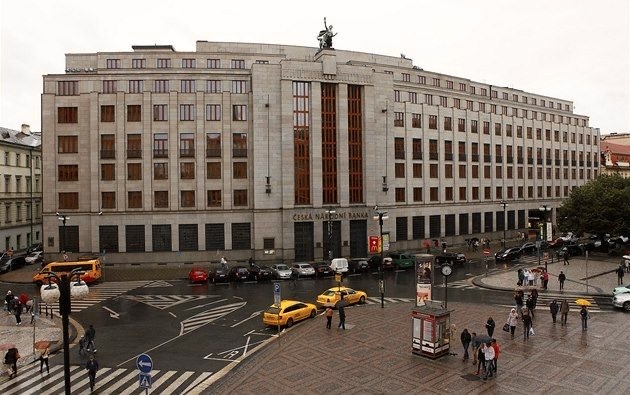
The latest directives from the Czech National Bank (CNB), set to take effect on April 1, 2026, combined with alarming data on housing affordability, paint a very different picture. Today improvisation is no longer an option. For anyone considering Prague as an investment destination or a place to live, understanding these changes can mean the difference between a smart deal and a bureaucratic dead end.
1. The CNB “Tightening”: What Changes from April 1, 2026
The headline news is the introduction of the CNB’s new Recommendations D and E. In an effort to stabilize the housing boom, the central bank has decided to step in and set stricter rules for buyers who are purchasing property not as a primary residence, but as an investment.
The Third Property Rule
The most impactful change is how ownership is counted. It’s no longer just about the purpose of the loan: the number of properties you already own now plays a key role.
If you are purchasing your third property (or beyond), banks will automatically apply stricter criteria. Most notably:
- LTV (Loan-to-Value) capped at 70%: the bank will finance only up to 70% of the property’s value, meaning you need at least a 30% cash deposit.
- DTI (Debt-to-Income) capped at 7: your total debt cannot exceed seven times your annual net income.
The Rules Apply Beyond Czech Borders
This is a crucial point for international investors: properties owned abroad are also included in the count.
If you already own two properties in another country and decide to buy your first property in Prague, Czech regulations will treat it as your third property. The CNB requires a sworn declaration for foreign assets and conducts strict checks within the Czech Republic.
2. Why This Decision? The Market Data
According to data analyzed by the Ministry for Regional Development (MMR), the Czech Republic is facing an significant housing affordability crisis.
On average, a household would need to save for over a decade to afford a standard 70 m² apartment. Between 2013 and 2020, property prices rose by 43%, far outpacing the OECD average.
According to the CNB, the Czech Republic already experienced a similar situation in 2019, when the market was estimated to be overvalued by around 25%. For this reason, preventing a speculative bubble has become a top priority in 2026.
However, investing in Prague remains expensive, and demand continues to outstrip supply. This means that investment properties are still seen as a safe haven, but they are becoming increasingly difficult to finance. Moreover, the current geopolitical situation creates uncertainty about a possible rise in mortgage interest rates, even for people buying a home to live in.
3. The Airbnb Effect and the “e-Tourist” Factor
In recent years, the boom in short-term rentals has fundamentally reshaped Prague’s real estate market. As highlighted in a report by the Ministry for Regional Development (MMR), thousands of apartments have been taken off the long-term housing market and repurposed for short-term rentals. This has led to a sharp rise in rental prices and made it increasingly difficult for local residents to find housing.
For today’s investors, this situation brings two very concrete implications.
The first is growing political pressure. Authorities are actively trying to rebalance the market by encouraging property owners to shift back to long-term rentals. This is no longer just a trend, it reflects a clear direction in public policy.
The second is digital enforcement. The year 2026 marks a turning point: tracking systems are now fully operational. Anyone managing an Airbnb in Prague can no longer operate “under the radar.” Every booked night in an apartment is recorded, monitored, and cross-checked with tax data. In other words, the room for informality has virtually disappeared.
4. Exceptions and Practical Pathways
Despite the stricter regulatory environment, there are still some areas of flexibility, especially for well-informed investors or experienced advisors.
For example, in the case of a pure refinancing, meaning you are renegotiating an existing mortgage without taking out additional funds, the new restrictions do not apply. This can be a valuable opportunity to improve existing loan conditions.
Another important exception concerns renovations. Loans used exclusively for reconstruction or property improvements are exempt from some of the stricter recommendations (such as D and E). In practical terms, investing in upgrading a property is still encouraged.
There are also more technical, but equally relevant, scenarios. If you own multiple cadastral units that effectively function as a single residence, you can request that they be treated as one property. Similarly, if you own less than a 50% share in a property, that share is not included in the total property count.
5. So, How Should You Approach Investing in Prague in 2026?
Despite the new regulatory hurdles, investing in Prague remains a solid choice. The stability of the Czech koruna and the steady appreciation of property values continue to make it an attractive market.
That said, one thing is clear: the landscape has changed. A much more strategic approach is now required. First, a comprehensive asset review is essential. As mentioned earlier, it’s not just about what you own in the Czech Republic, any properties held abroad are also taken into account.
Equally important is capital planning. In most cases, real estate investments now require at least a 30% upfront deposit, something that needs to be carefully planned from the very beginning.
Finally, if you are really thinking bout investing in Prague, professional guidance will be crucial. It’s no longer enough to understand the market, you need someone who also understands banking dynamics, legal frameworks, and administrative procedures.
In an increasingly regulated environment, expertise is what truly makes the difference.
Resources: https://www.cnb.cz/cs/